Third Party Pharma Manufacturer in India: How to Choose Right
Finding a reliable third party pharma manufacturer in India is one decision that can either accelerate your brand or quietly damage it for years.
There are thousands of facilities across Himachal Pradesh, Gujarat, Uttarakhand, and Haryana — all certified, all competitive on price, and all telling you the same thing on the phone. So how do you actually make a decision you won’t regret six months into production?
Here’s what experienced brand owners and pharma entrepreneurs have learned, usually the hard way.
Why Your Third Party Pharma Manufacturer Choice Matters More Than You Think
Third party pharma manufacturing is not just a production arrangement. It’s a dependency.
Your brand’s reputation, your product quality, your delivery timelines, your regulatory standing — all of it runs through this one partner. A wrong choice doesn’t just cost money. It costs time, market credibility, and sometimes the entire product line.
Yet most people approach this decision like they’re buying office supplies. Lowest quote wins.
That thinking is exactly where things start going wrong.
Step 1 — Define Your Needs Before You Call Any Third Party Pharma Manufacturer
Before shortlisting manufacturers, get specific about your own requirements.
What dosage form do you need — tablets, capsules, dry syrup, injections, ointments? What’s your expected monthly volume? Are you selling domestically, exporting, or both? Do you have a formulation ready or do you need the manufacturer to develop it?
These questions seem obvious but most buyers go into the first conversation without clear answers. A third party pharma manufacturer notices this immediately — and the negotiation goes entirely in their favor.
Write down your non-negotiables before the first call. Stick to them.
Step 2 — Understand What Certifications Cover in Third Party Pharma Manufacturing
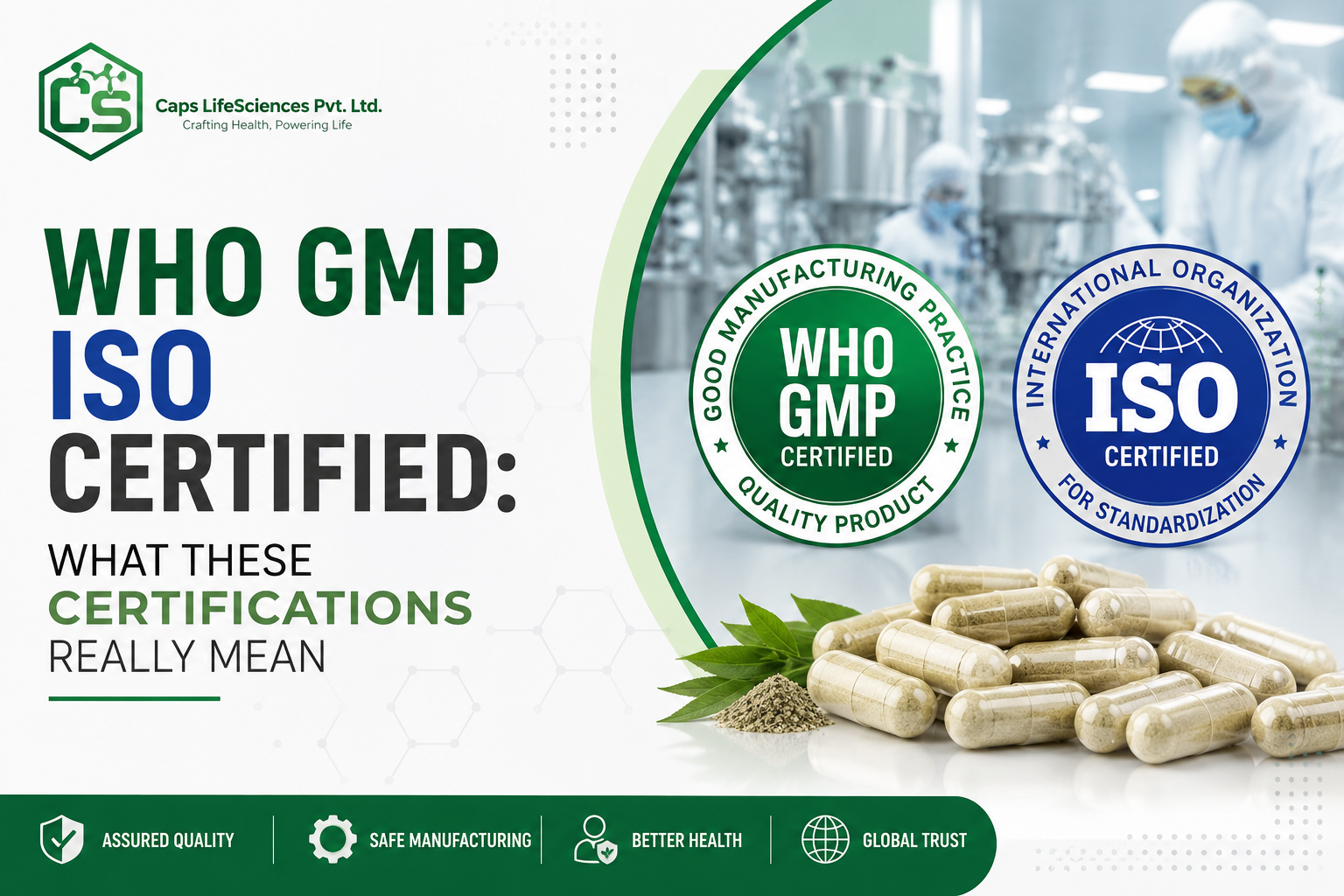
WHO-GMP certification is mandatory for any serious third party pharma manufacturer. So is Schedule M compliance under Indian pharma law. But here is what those certifications don’t tell you:
They reflect a point-in-time audit. A facility that was compliant eighteen months ago may not have maintained the same standards since. Audits happen periodically — operations happen daily.
Ask when the last regulatory inspection was conducted and whether any observations were raised. A third party pharma manufacturer who handles this question openly is generally more trustworthy than one who gets defensive or vague.
According to WHO GMP guidelines, maintaining GMP compliance is an ongoing operational commitment — not a one-time certification achievement. For export-focused brands, also check whether the manufacturer has experience with USFDA, EU-GMP, or TGA requirements. Domestic GMP and export-grade compliance are entirely different conversations.
Step 3 — Match Your Third Party Pharma Manufacturer to Your Therapeutic Category
This is one of the most overlooked factors in the entire selection process.
A third party pharma manufacturer that primarily works in general range products — antibiotics, antacids, painkillers — may not be the right fit if you’re launching a specialized cardiology or dermatology range. Sourcing relationships, formulation sensitivity, and quality benchmarks vary significantly across therapeutic categories.
Ask directly: what percentage of their current production falls in your category? You don’t need client names — just enough to understand whether your product type is familiar territory for them or a new experiment.
Step 4 — Go Beyond the Brochure When Evaluating a Third Party Pharma Manufacturer
Every third party pharma manufacturer has a brochure that looks impressive. Modern facility photographs, a list of certifications, a product range covering everything from syrups to injectables.
The brochure is a starting point. It is not due diligence.
Request a facility visit. If distance is an issue, ask for a live video walkthrough — not a pre-recorded clip. Watch how the production floor operates. Pay attention to how the quality team interacts with production staff. Notice whether basic hygiene protocols are followed in practice or just in documentation.
Small things reveal a lot. A cluttered dispensing area, unlabeled raw material containers, staff moving between sections without proper gowning — these are signs that compliance culture is weak, regardless of what the certificate on the wall says.
Step 5 — Test the Quality Control Setup of Your Third Party Pharma Manufacturer
Third party pharma manufacturers in India broadly fall into two types: those with a functional in-house QC lab and those that depend heavily on outsourced testing.
Both can work. But outsourced testing adds time and creates accountability gaps. If a batch fails and testing was done externally, the manufacturer can point fingers elsewhere. Your timelines suffer either way.
Ask specifically:
- What tests are run in-house versus sent to a third-party lab?
- What is the standard batch release timeline?
- How are deviations or out-of-specification results handled?
The quality of their answers tells you more than the answers themselves.
Step 6 — Clarify All Commercials Before You Commit
Pricing conversations with a third party pharma manufacturer can be deliberately unclear. Per-unit cost is quoted without factoring in MOQs, trial batch charges, stability study costs, artwork development fees, and documentation charges.
By the time everything is added up, the attractive quote you received looks very different.
Get a complete cost sheet in writing covering:
- Per-unit manufacturing cost at your required batch size
- MOQ and what happens if you need a batch below that
- Stability testing and product registration support costs
- Payment terms and advance requirements
As FSSAI guidelines indicate, documented agreements between brand owners and manufacturers protect both parties — a reluctance to put commercials in writing is itself a red flag.
Step 7 — Have a Direct Timeline Conversation
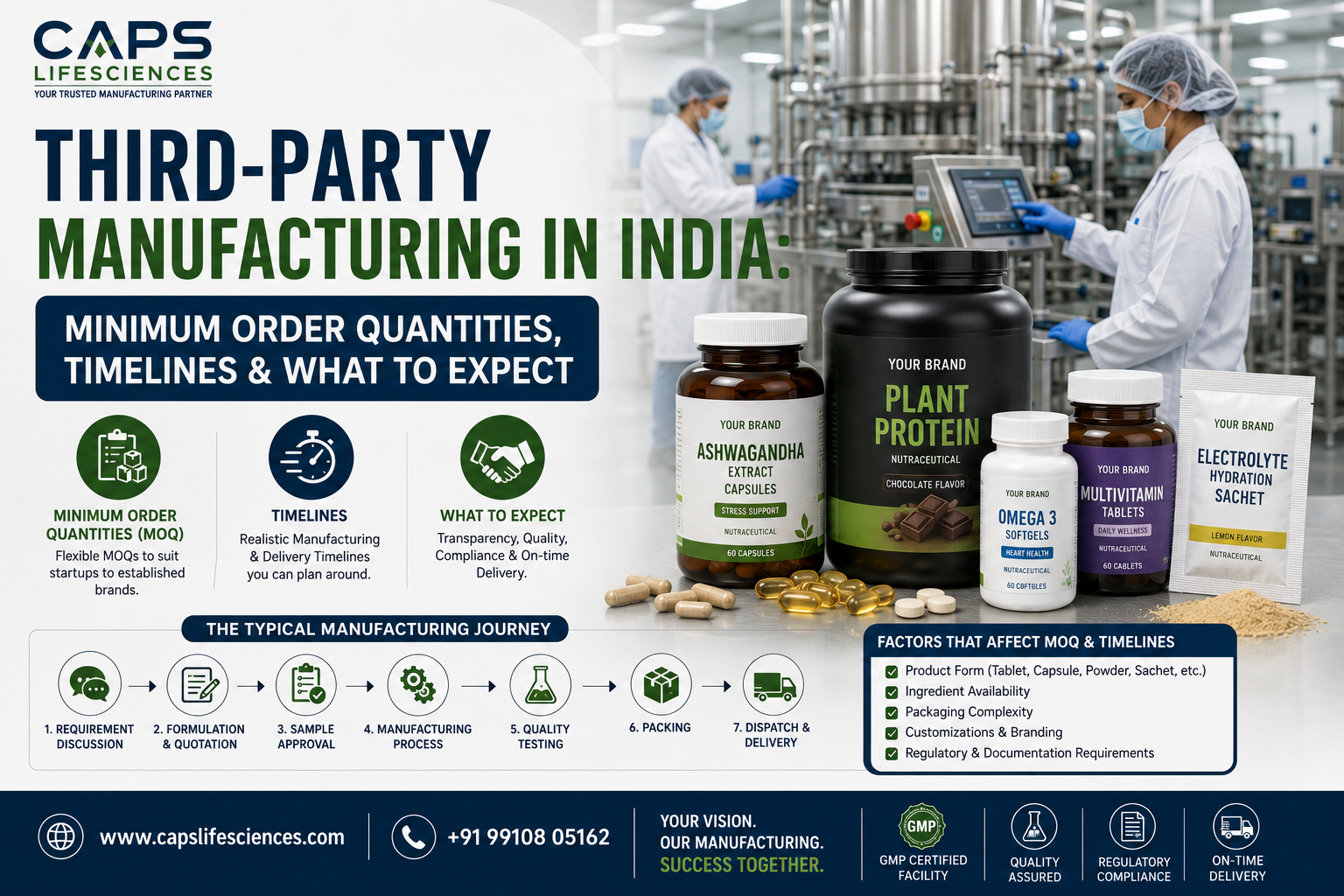
Pharma manufacturing timelines in India are routinely underestimated — by both parties.
Raw material procurement delays, regulatory documentation, QC holds, and packaging material lead times all add up. A third party pharma manufacturer who promises delivery in three weeks without asking about your formulation complexity or batch size is either not being honest or hasn’t thought it through.
Ask for a realistic production timeline broken down by stage — raw material sourcing, manufacturing, QC clearance, packaging, and dispatch. Then add a buffer and plan around that.
The Kind of Third Party Pharma Manufacturer Worth Working With
After all the evaluation, the manufacturers that build long-term relationships with brands share consistent traits.
They ask questions about your product before giving you a price. They flag potential formulation or regulatory issues early rather than letting them surface after production. They are reachable when something goes wrong — not just when you’re placing an order. They treat your brand’s reputation as part of their own accountability.
That combination is rarer than it should be. But it exists, and it’s worth holding out for.
Final Thought
A third party pharma manufacturer partnership in India can give your brand a serious competitive edge — lower capital requirement, faster market entry, and access to specialized manufacturing capabilities you couldn’t build in-house.
But only if the partner is right. Take the selection process seriously. Ask the hard questions early. The cheapest option and the best option are almost never the same thing in this industry.
Caps Lifescience is a WHO-GMP and ISO certified third party pharma manufacturer in India, offering manufacturing support across tablets, capsules, liquids, sachets, and Ayurvedic formulations. Contact us to discuss your requirements. Also explore our nutraceutical manufacturing capabilities to understand what we can build together.