Private Label Ayurvedic Supplements: What You Need Before You Contact a Manufacturer
If you’re seriously considering launching a private label Ayurvedic supplement brand, the difference between a smooth start and a frustrating one almost always comes down to what you bring to the first manufacturer conversation.
Every week, manufacturers across India receive enquiries that go something like this: “Hi, I want to start a private label Ayurvedic brand. Can you share your product list and pricing?”
Nothing wrong with that message. But nine times out of ten, the person sending it isn’t ready for the conversation that follows — and both sides end up wasting time.
This guide will help you walk into that first private label Ayurvedic manufacturer meeting prepared — not just with questions, but with the clarity that makes manufacturers take you seriously.
Why Private Label Ayurvedic Manufacturing Is Different
Private labelling in general means a manufacturer produces a product and you sell it under your own brand name.
But private label Ayurvedic supplements carry a layer of regulatory and formulation complexity that makes them distinctly different from regular nutraceuticals or general wellness products.
In India, Ayurvedic products fall under the AYUSH category, regulated by the Ministry of AYUSH and relevant state licensing authorities. Manufacturing requires an AYUSH license — separate from a standard pharma manufacturing license. The formulations, permissible ingredients, and labelling requirements have their own framework under the Drugs and Cosmetics Act.
This matters because it directly affects which private label Ayurvedic manufacturers you can legally work with, what claims you can make on your label, and what documentation you need before you can sell.
Understanding this upfront saves you from building a brand around a product or claim that can’t actually be approved.
Before You Call Anyone About Private Label Ayurvedic Manufacturing
Have a Clear Product Idea, Not Just a Category
Private label Ayurvedic supplements cover an enormous range — from classical formulations like Chyawanprash and Ashwagandha capsules to modern blends targeting sleep, immunity, hair health, and weight management.
Before approaching any manufacturer, narrow it down. What specific product do you want to launch? What is the primary benefit you’re positioning around? Who is the target consumer?
A private label Ayurvedic manufacturer’s first question will almost always be: what exactly do you want to make? If your answer is still undecided, the conversation stalls before it starts.
You don’t need a final formulation. You need a clear product concept.
Understand Classical vs Proprietary Private Label Ayurvedic Formulations
This distinction matters more than most first-time brand owners realize.
Classical Ayurvedic formulations are defined in ancient Ayurvedic texts — Ashwagandha churna, Triphala, Brahmi tablets, Shatavari capsules. These are well-established, ingredient ratios are documented, and getting them approved is relatively straightforward because the regulatory pathway is defined.
Proprietary Ayurvedic formulations are combinations you or your manufacturer develop that don’t exist as classical formulas. These require a separate proprietary Ayurvedic medicine license and go through a different approval process.
If you want to differentiate through a unique formulation, proprietary is the direction. If you want a faster, simpler path to market, classical private label Ayurvedic formulations are the more practical starting point.
According to Ministry of AYUSH guidelines, both pathways are clearly defined — but the documentation requirements and timelines differ significantly. Know which category your product falls into before the first call.
Know Your Target Market for Private Label Ayurvedic Products
This single factor changes almost everything about how your private label Ayurvedic product needs to be manufactured, documented, and labelled.
For domestic India sales, your product needs to comply with AYUSH licensing requirements and FSSAI guidelines depending on product type and claims made.
For export markets, requirements depend entirely on the destination country. The US, UK, EU, UAE, and Southeast Asian markets each have their own import and labelling regulations for Ayurvedic or herbal supplements. Some classify them as food supplements, others as traditional medicines — and documentation required varies significantly.
A private label Ayurvedic manufacturer experienced in export can guide you through this. But arrive with a clear answer on where you’re selling — it affects formulation choices, permissible claims, label design, and sometimes raw material sourcing itself.
Have a Realistic Budget for Private Label Ayurvedic Manufacturing
Private label Ayurvedic manufacturing involves more than just per-unit production cost. Before talking to manufacturers, understand your total investment covers:
Product development and stability — proprietary formulation development takes time and money. Even for classical formulations, stability testing and shelf life validation are part of the process.
AYUSH licensing — if the manufacturer holds the license and you’re operating under it as a private label arrangement, this may be included. If you need your own brand license, factor in that cost and timeline separately.
Packaging development — labels, cartons, bottles or blister packs. Good private label Ayurvedic packaging is not cheap, and it matters enormously for consumer perception.
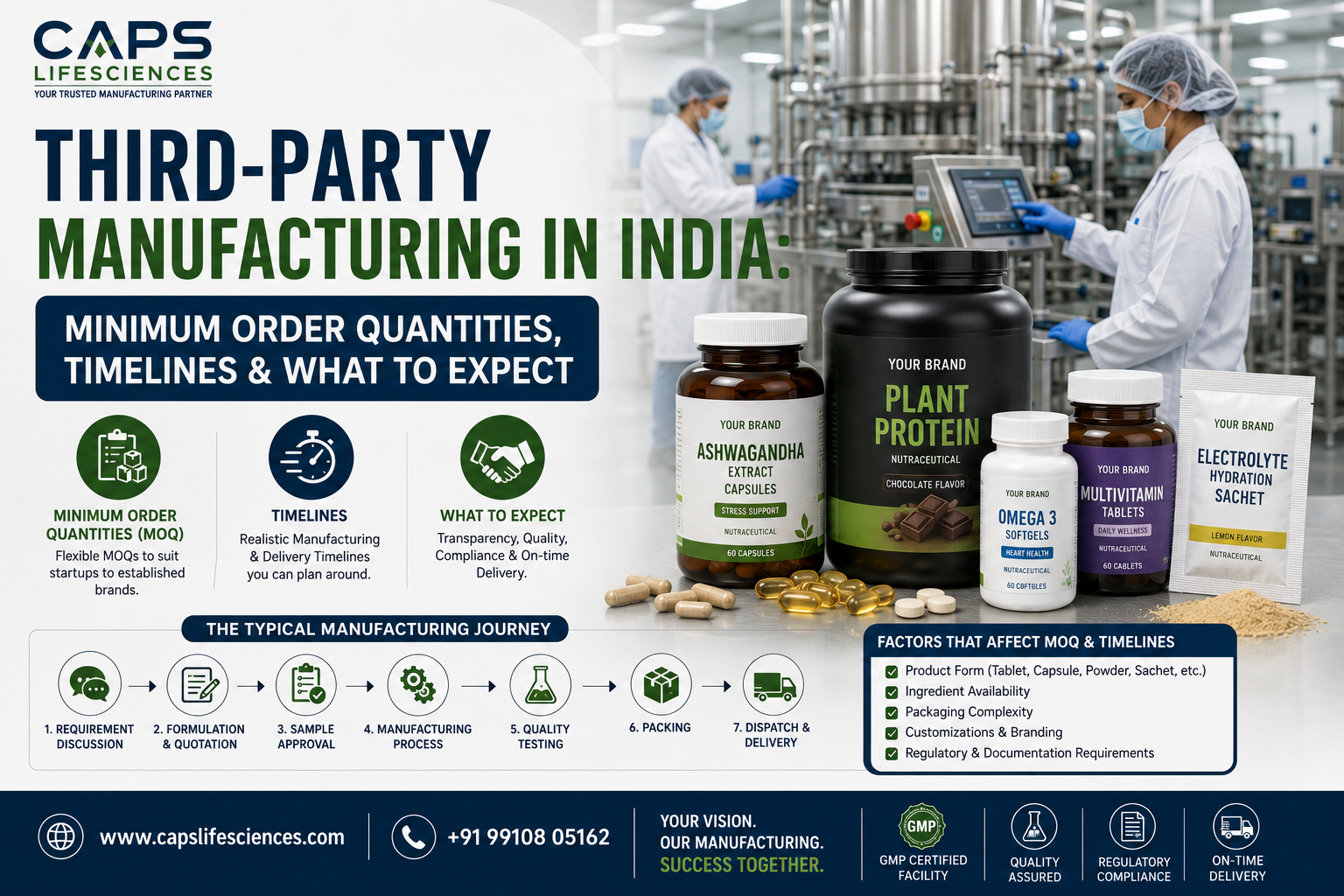
MOQs — for private label Ayurvedic products, MOQs typically range from 5,000 to 50,000 units depending on product and format.
Going into a manufacturer conversation without a budget range is like walking into a showroom without knowing what you can spend. The manufacturer can’t help you properly, and you can’t evaluate their proposal honestly.
Think Through Your Private Label Ayurvedic Label Claims Carefully
This is where many first-time brand owners create problems for themselves.
Claims on a private label Ayurvedic supplement label are governed by AYUSH and drug labelling regulations. Disease claims — stating your product treats, cures, or prevents a specific medical condition — are generally not permitted without going through a drug approval process.
What is permissible are wellness and benefit-oriented claims — supporting immunity, promoting vitality, helping manage stress, supporting healthy digestion.
The nuance matters. “Supports healthy blood sugar levels” is different from “treats diabetes.” Understand where that line is for your specific product before finalizing a single word of label copy.
Shortlist Private Label Ayurvedic Manufacturers With the Right License
Not every pharma or nutraceutical manufacturer in India holds an AYUSH manufacturing license. Some work exclusively in general nutraceuticals or allopathic formulations and cannot legally manufacture private label Ayurvedic products.
Confirm upfront that any manufacturer holds a valid AYUSH license for your specific product category. Also check whether they have active experience with the specific ingredient profile you’re working with — Ashwagandha, Shatavari, Brahmi, Triphala. Established sourcing relationships and formulation knowledge in these botanicals make a real operational difference.
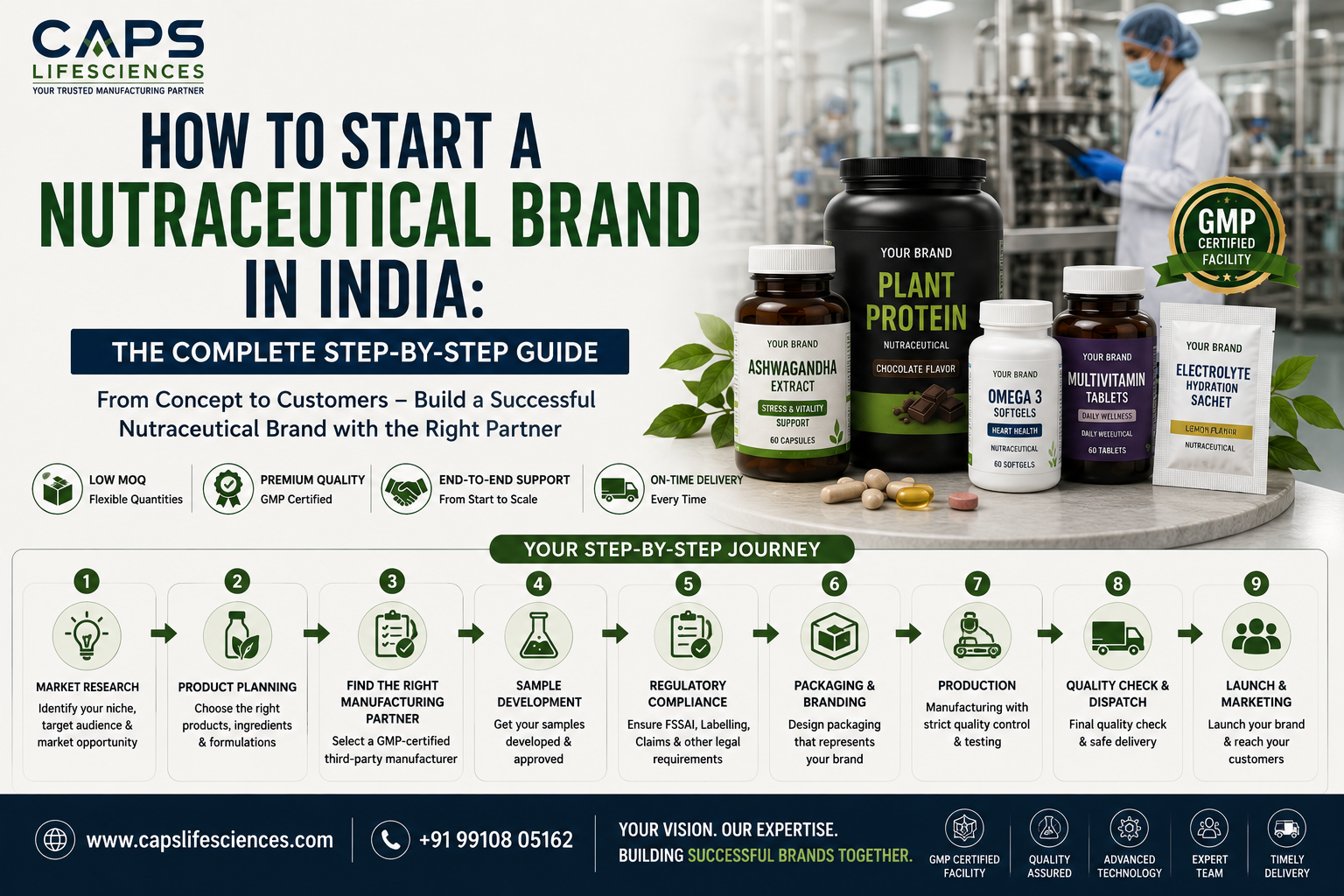
Learn more about what a compliant private label Ayurvedic manufacturing setup looks like at our nutraceutical manufacturing page.
What to Bring to the First Private Label Ayurvedic Conversation
If you’ve worked through the points above, you should be able to communicate clearly:
- The specific product or product concept you want to manufacture
- Whether it’s a classical or proprietary private label Ayurvedic formulation
- Your target market — domestic, export, or both
- Your approximate launch volume and MOQ comfort
- Your realistic go-to-market timeline
- Your budget range in broad terms
You don’t need a finalized formulation, registered brand, or completed label. Manufacturers expect to work through those details. But the points above give the conversation enough structure to be genuinely useful on both sides.
One Question Most People Don’t Think to Ask
Ask the private label Ayurvedic manufacturer who else they’ve worked with in your category — not for names, but for a sense of the brands and product types they’ve supported.
A manufacturer who has helped five private label Ayurvedic brands go to market in the last two years understands your journey in a way that a facility doing its first Ayurvedic job simply doesn’t. That experience shows up in the guidance they give, the problems they help you avoid, and the speed with which things move once production begins.
Simple question. The answer tells you a lot.
Final Thought
The private label Ayurvedic supplement market in India and globally is genuinely strong right now. Consumer demand is real, the category is growing, and there’s genuine space for well-positioned brands with quality products.
The brands that succeed are almost always the ones that did the groundwork properly — understood the regulatory landscape, chose the right private label Ayurvedic manufacturing partner, and went to market with a product they could stand behind.
None of that starts with a rushed enquiry email. It starts with clarity — about your product, your market, and what you’re actually building.
Caps Lifescience holds AYUSH manufacturing certification and works with private label Ayurvedic brands across classical and proprietary formulations — tablets, capsules, churnas, and liquids. Contact us to discuss your product idea, or explore our nutraceutical manufacturing capabilities before your first call.