Nutraceutical Contract Manufacturer in India: What Most Brands Get Wrong
Choosing the right nutraceutical contract manufacturer in India is one of the most important decisions a brand owner will make — and one of the most commonly mishandled ones.
Most brand owners spend weeks comparing price lists and end up picking the wrong nutraceutical contract manufacturer anyway. Not because they didn’t do their research — but because they were researching the wrong things.
If you’re building a nutraceutical brand and evaluating a contract manufacturer in India, this guide will help you avoid the mistakes that quietly kill product launches before they even begin.
Why Finding the Right Nutraceutical Contract Manufacturer Is Harder Than It Looks
India has hundreds of nutraceutical contract manufacturers. From large GMP-certified facilities in Himachal Pradesh to smaller units in Gujarat and Haryana, the options are genuinely overwhelming.
And here’s the problem — most of them will say yes to everything you ask. Yes to your timeline. Yes to your formulation. Yes to your MOQ. Yes to export documentation.
That “yes” culture is exactly where things go wrong.
Mistake #1 — Choosing a Nutraceutical Contract Manufacturer on Price First
Price matters. But it should be the last filter, not the first.
A nutraceutical contract manufacturer offering capsules at ₹2.80 per unit sounds attractive until you realize the excipient quality is being cut, the coating is inconsistent, or they’re running your batch alongside four others with no proper line clearance.
The cost of a recall, a complaint from a distributor, or a regulatory flag from a foreign buyer is far higher than whatever you saved on per-unit pricing.
When you shortlist any nutraceutical contract manufacturer, ask for a full cost breakdown — raw material grade, excipient source, packaging material specs. A good manufacturer gives you this without hesitation. A concerning one gives you a final number and nothing else.
According to FSSAI guidelines, nutraceutical manufacturers are required to maintain documented quality standards for all raw materials — making this transparency a regulatory expectation, not just a preference.
Mistake #2 — Confusing Certifications With Nutraceutical Contract Manufacturer Capability
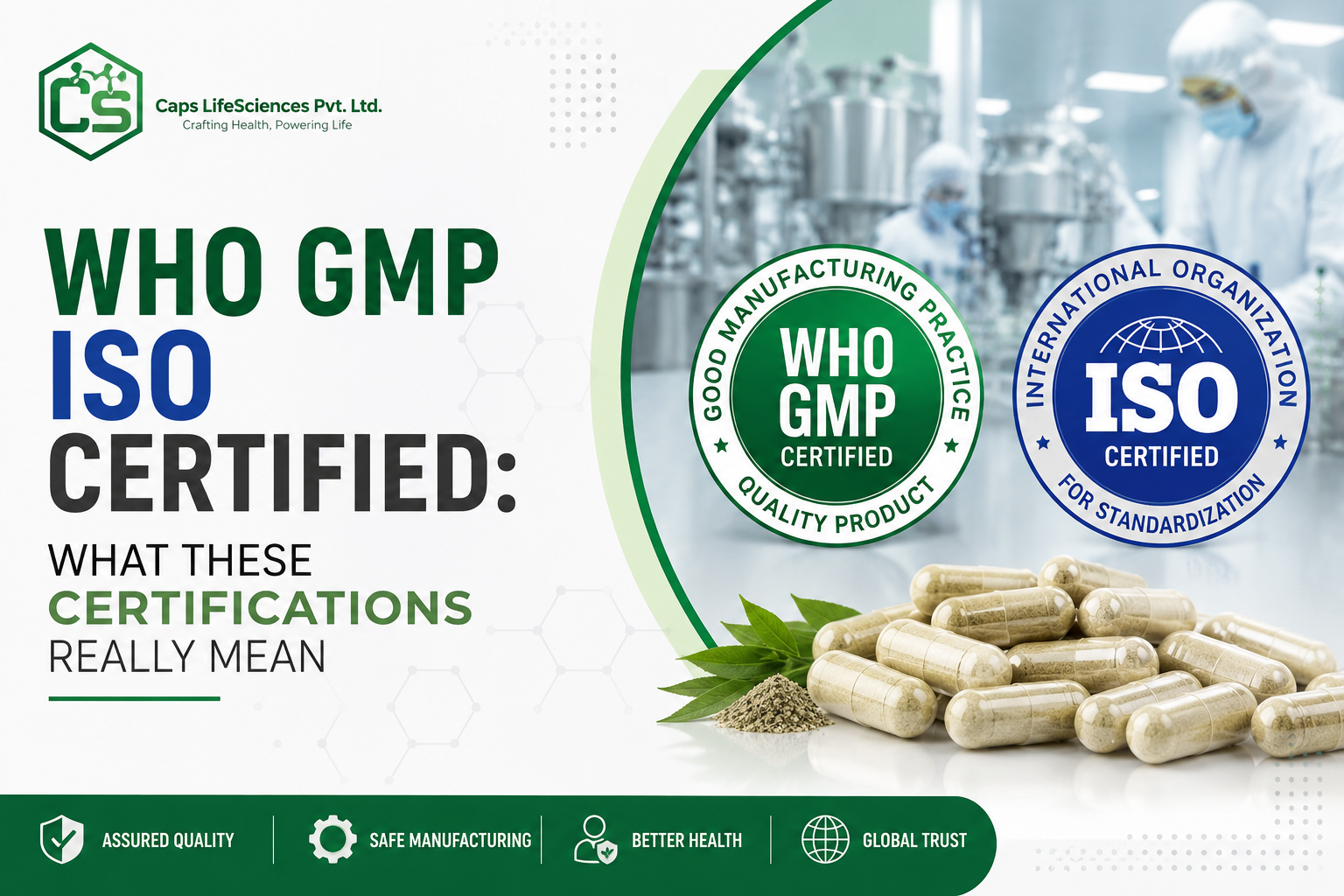
WHO-GMP and ISO certifications are the baseline for any nutraceutical contract manufacturer in India. They tell you the facility has cleared an audit at some point in time. They do not tell you:
- Whether that facility has experience in your specific dosage form
- Whether their quality team is actively involved or just on paper
- Whether they can handle your batch size without compromising on process
Ask specifically: Have you manufactured this formulation before? Can I see batch manufacturing records from a previous run?
A serious nutraceutical contract manufacturer won’t hesitate to show you redacted documentation. If they do hesitate, that tells you something important.
As WHO GMP guidelines outline, certification confirms a facility met standards at audit time — not that it maintains them daily. That gap is your risk.
Mistake #3 — Not Visiting Your Nutraceutical Contract Manufacturer’s Facility
This one is underestimated, especially by first-time brand owners operating on a tight budget.
You don’t need to be a pharma expert to notice things during a plant visit. Is the production floor clean and organized? Are workers following SOPs or cutting corners when no one senior is watching? How does the quality control team carry themselves?
A facility visit also changes the relationship dynamic. A nutraceutical contract manufacturer takes you more seriously when you show up in person, gives you more honest answers, and is more likely to flag potential formulation issues upfront.
If visiting isn’t possible, ask for a live video walkthrough over a call — not a pre-recorded promotional clip.
Mistake #4 — Ignoring MOQs at the Formulation Stage
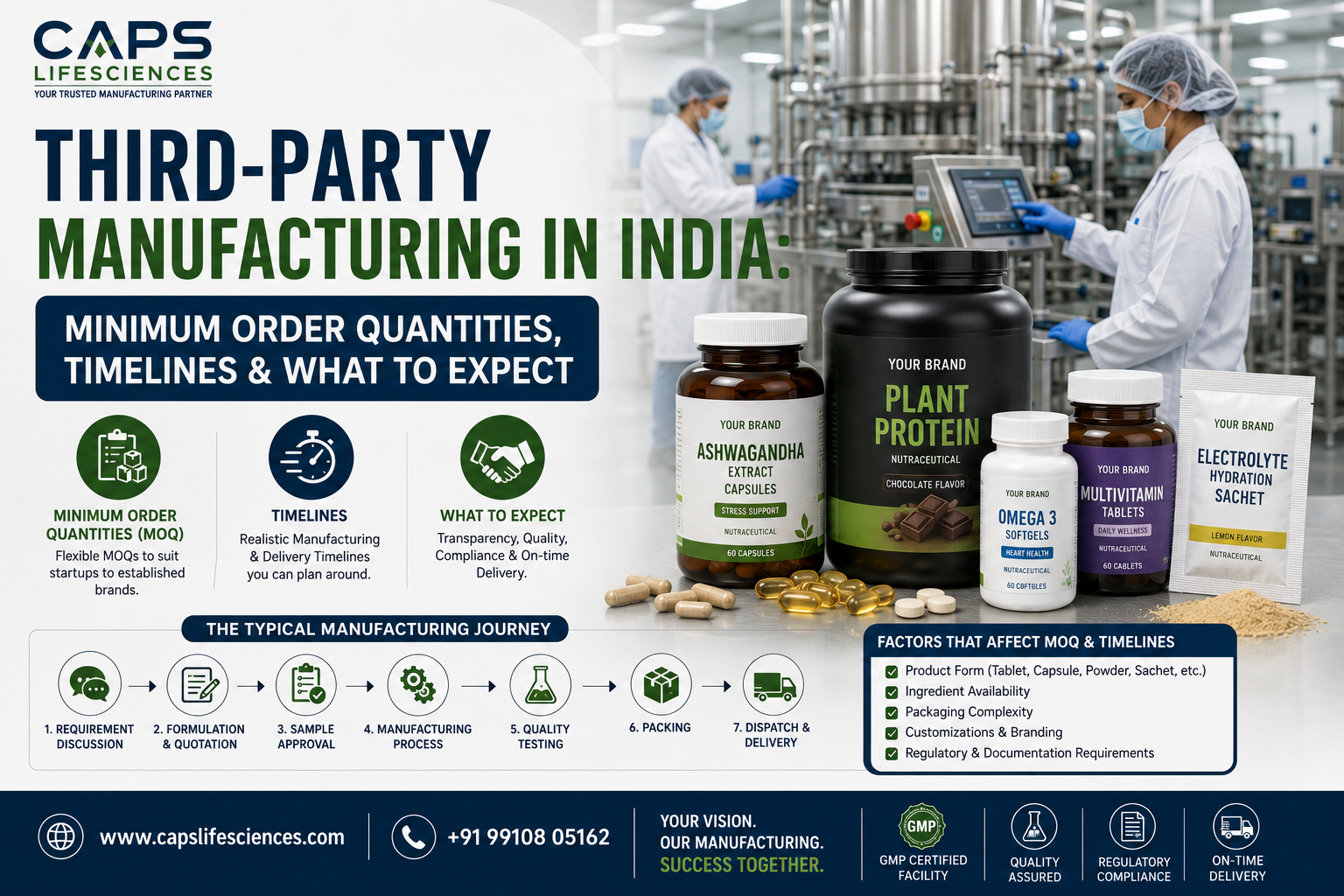
Many brands lock in a formulation, finalize packaging design, register the product, and then find out their nutraceutical contract manufacturer’s MOQ is 50,000 units — for a product they wanted to test with 5,000.
Clarify minimum order quantities before you go deep into formulation development. Some nutraceutical contract manufacturers work with lower trial batches for new clients, but it needs to be discussed and agreed in writing before you invest time or money in product design.
Mistake #5 — Skipping the Stability and Testing Conversation
Your product will sit in a warehouse. It will travel through varying temperatures. A customer will buy it six months after manufacturing. What happens to it during that time?
Ask your nutraceutical contract manufacturer specifically about accelerated stability studies, shelf life validation protocols, and whether testing is handled in-house or outsourced.
If they look confused or vague when you raise this, they’re probably not the right manufacturing partner — especially for export markets.
What to Actually Look For in a Nutraceutical Contract Manufacturer
Here is what a genuinely reliable nutraceutical contract manufacturer in India should offer without much back and forth.
Nutraceutical Contract Manufacturer With Clear Regulatory Standing
Valid WHO-GMP certification, updated ISO documentation, and familiarity with export market requirements — USFDA, EU-GMP, or at minimum FSSAI compliance for domestic brands. Regulatory standing is the floor, not the ceiling.
Dosage Form Expertise in Your Category
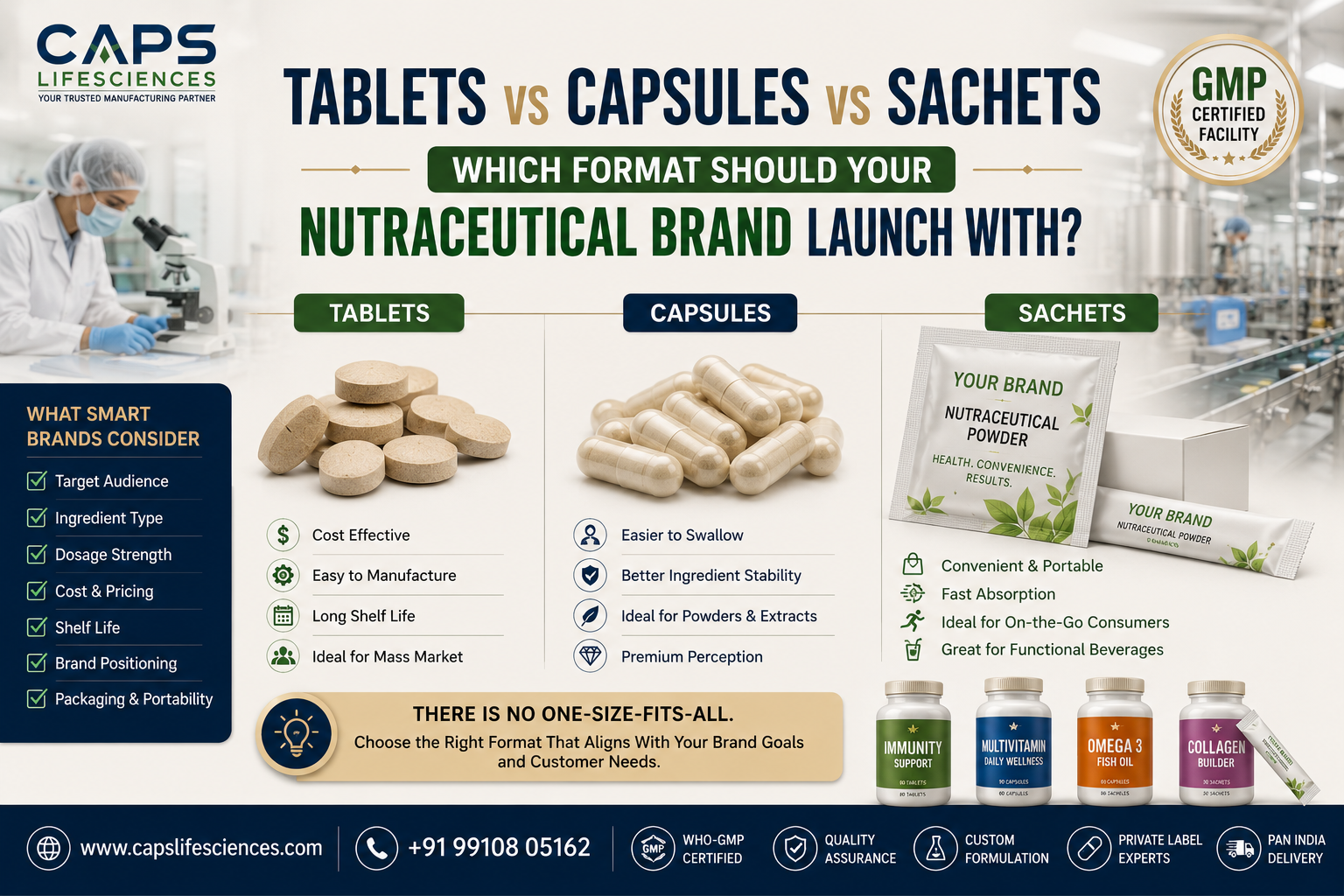
Experience specifically in the format you need — tablets, hard gelatin capsules, soft gels, sachets, or liquids. A nutraceutical contract manufacturer that primarily does tablets may not give you the best output on sachets. These are different processes, different equipment, and different quality checkpoints entirely.
In-House Quality Control
A nutraceutical contract manufacturer with a QC lab that runs its own checks adds both speed and accountability. If a result comes back out of specification and testing was outsourced, the manufacturer can point fingers elsewhere — but your timeline suffers either way.
Honest Communication at Every Stage
When you raise a concern, does the nutraceutical contract manufacturer engage with it directly — or redirect you to a sales pitch? This sounds intangible but it’s one of the clearest predictors of how the relationship will function when something goes wrong.
Track Record in Your Specific Product Category
A nutraceutical contract manufacturer that has worked in sports nutrition, women’s health, or immunity supplements understands the sourcing sensitivities, formulation requirements, and regulatory nuances specific to those categories. General manufacturing experience is not the same as category experience.
Questions Worth Asking Before You Commit
Beyond standard due diligence, these specific questions tend to surface the most useful information about any nutraceutical contract manufacturer:
- When was your last regulatory inspection and what were the findings?
- Can I see a sample batch manufacturing record?
- What is your standard QC turnaround before batch release?
- How do you handle raw material shortages mid-production?
- What brands in my specific category are you currently producing for?
You don’t need complete answers immediately. But how a nutraceutical contract manufacturer responds to these questions tells you considerably more than their brochure does.
One Last Thing
The best nutraceutical contract manufacturer partnerships in India are built on transparency from day one — not on who gave the most polished presentation in the first call.
Take your time with shortlisting. Ask uncomfortable questions. Visit if you can. Treat the first batch as a test of the relationship, not just the product.
The nutraceutical contract manufacturers worth working with will not only expect that approach — they’ll respect it.
Caps Lifescience is a WHO-GMP and ISO certified nutraceutical contract manufacturer in India, working with domestic and international brands across tablets, capsules, sachets, and liquids. Contact us to discuss your product requirements or schedule a facility overview. Also read: WHO-GMP vs ISO Certified — What These Certifications Actually Mean